Magic: The Gathering for Beginners: How to Play and Start Collecting
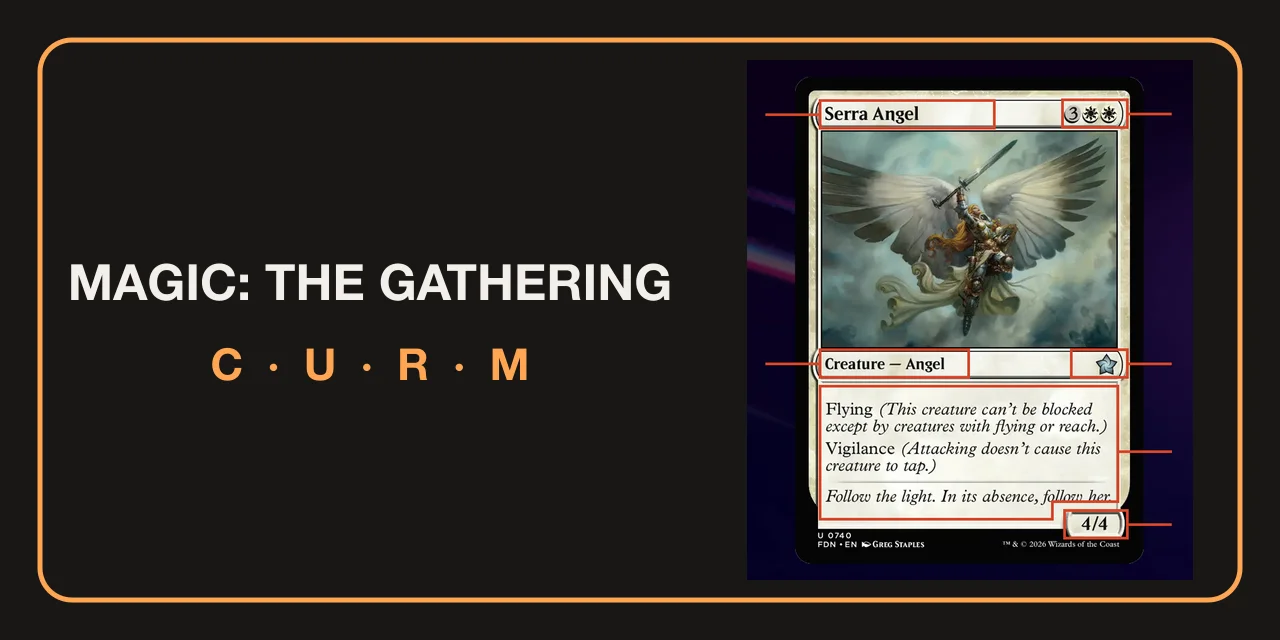
As of November 14, 2026. Richard Garfield's Magic: The Gathering (MTG) has been in print since August 5, 1993, when Wizards of the Coast released Limited Edition, better known as Alpha. It is two hobbies in one box: every card you draw in a game is also a line on a set checklist. This beginner's guide covers both halves. First how a game of Magic actually runs, which formats to know and the cheapest ways to get started; then how to start collecting MTG cards: what Play Boosters and Collector Boosters contain, how to tell rarity, what borderless, showcase and serialized mean, complete set versus master set, and the NM/LP condition grades that trip up new collectors.
How to play Magic: The Gathering in plain words
A standard game is one-on-one. Each player brings a deck of at least 60 cards, starts on 20 life and draws an opening hand of seven; if the hand is bad, you can mulligan. You win by bringing your opponent to zero life, and a player who has to draw from an empty library loses too (Comprehensive Rules of November 6, 2026, rules 103.4 and 704.5).
Everything costs mana, and mana comes from lands. You may play one land per turn and tap it (turn it sideways) for mana of its color. There are five colors: white, blue, black, red and green. A spell's cost sits in the card's top-right corner; a number in that cost can be paid with mana of any color.
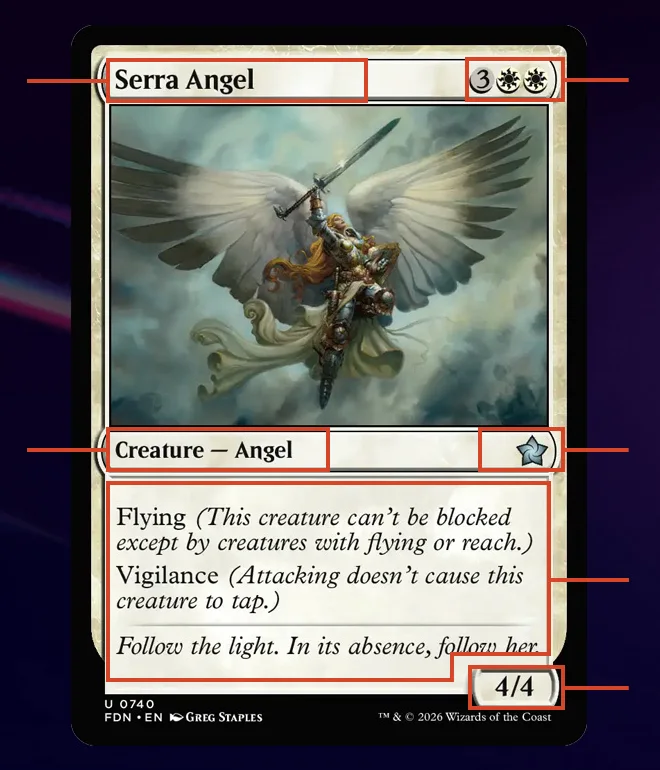
Besides lands, a deck holds creatures (they attack and block, but not on the turn they arrive), instants (castable at almost any moment, even on your opponent's turn), sorceries (only in your own main phase), artifacts, enchantments, planeswalkers and battles. Permanents stay on the battlefield; instants and sorceries go to the graveyard once they resolve. Look at the bottom-left of the Serra Angel above and you will see collector data too: "U 0740 FDN • EN".
Every turn runs through the same five phases (rule 500.1 and the How to Play page at magic.wizards.com):
| Phase | What you do |
|---|---|
| Beginning | untap your cards, resolve upkeep effects, draw a card (in a two-player game, whoever goes first skips that first draw) |
| First main phase | play a land and cast any spells you can pay for |
| Combat | declare attackers; the defender declares blockers; a creature dealt damage equal to its toughness or more dies |
| Second main phase | the same as the first, except you can't play a second land if you already played one |
| End | damage wears off creatures, "until end of turn" effects end, the turn passes |
MTG formats explained: Standard, Commander and Limited
A format is a set of deckbuilding rules. These three cover most tables:
| Format | Deck | Players and starting life |
|---|---|---|
| Standard | 60 cards or more, no more than 4 copies of any card except basic lands, sideboard up to 15; recent sets only | 2 players, 20 life each |
| Commander | exactly 100 cards including the commander; one copy of each card except basic lands; only your commander's colors | 3 to 5 players (four is the norm), 40 life each |
| Draft and Sealed (Limited) | 40 cards or more, built from boosters opened at the event plus basic lands | 20 life each |
Standard rotates once a year: after the first premier set Prerelease of the year, its six oldest sets leave the format, according to Wizards' Standard page. Commander is the one most new players hear about first, and Wizards calls it "Magic's most popular multiplayer format" on its format page, on product pages and in a Wizards Play Network article of November 18, 2025. You pick a legendary creature to lead the deck; it waits in the command zone, can be cast from there, and a player dealt 21 combat damage by the same commander loses (rule 903.10a). With 99 singleton cards around one leader, no two decks at a Commander table play alike.
How to get started: MTG Arena, Welcome Decks, Beginner Box or a precon
| Option | What it is | Best for |
|---|---|---|
| MTG Arena | free-to-download digital Magic with a tutorial and starter decks; PC, Mac, Android, iOS, Steam | learning the rules at home; Arena cards stay digital |
| Welcome Deck | a 40-card deck in one color; Star Trek has five, one per color, each with a reference card and deck box | a first game at a local store |
| Beginner Box | a two-player box; the Foundations one (2024) holds ten 20-card decks, playmats, a guide and life counters | two newcomers learning together |
| 60-Card Theme Deck | a ready-to-play deck built for Standard, introduced with Lorwyn Eclipsed in January 2026 | a first Standard night |
| Commander precon | a preconstructed 100-card deck with a foil commander | a group of three to five friends |
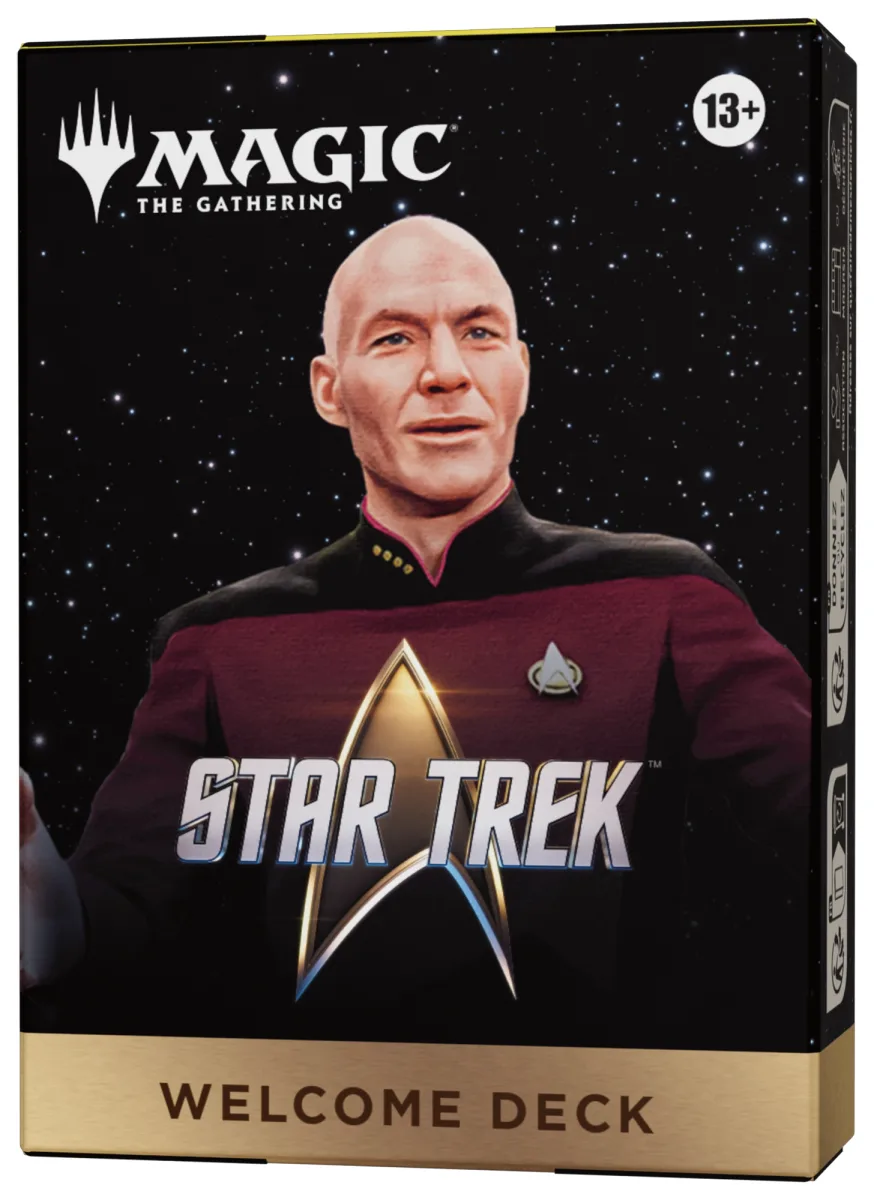
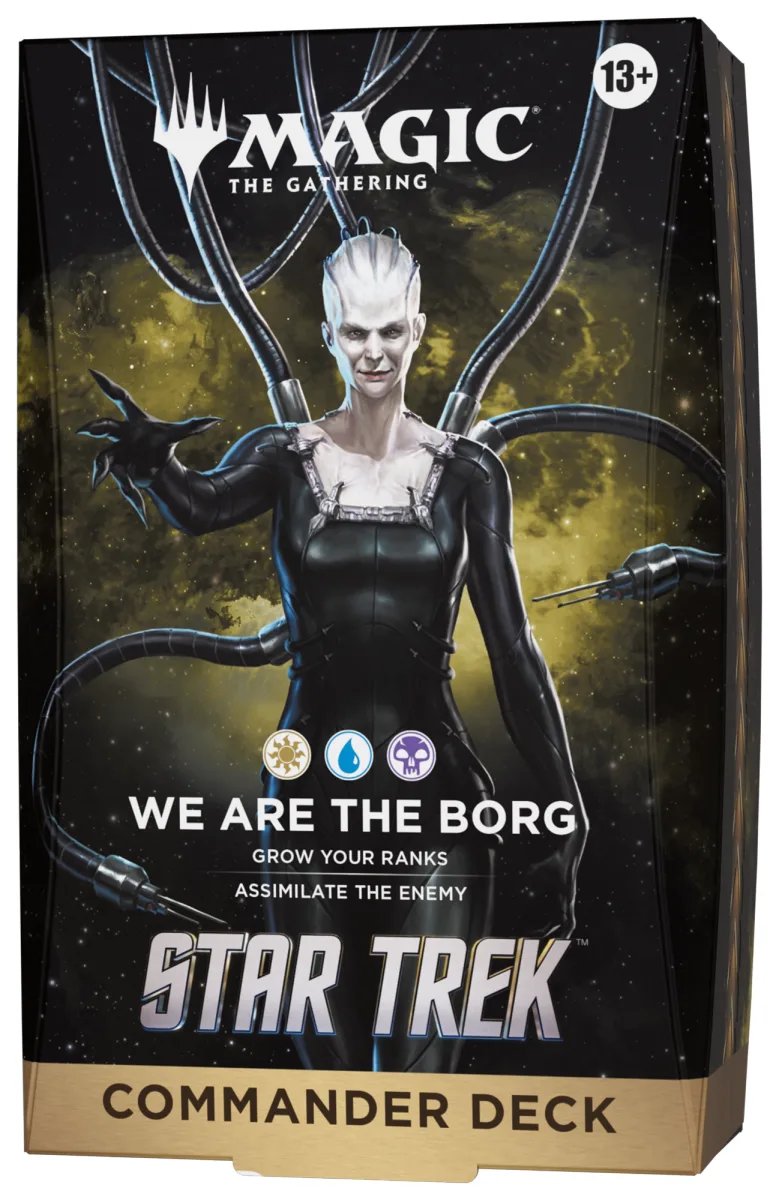
Wizards announced the Star Trek Welcome Decks on August 5, 2026 for participating Wizards Play Network stores; together they hold 35 new-to-Magic cards (16 common, 9 uncommon, 5 rare, 5 mythic rare, per Wizards' collecting article of October 20, 2026). Beginner Boxes came out for sets such as Foundations (2024) and Avatar: The Last Airbender (2025); the Star Trek one was cancelled, as our MTG Star Trek release article explains. On MTG Arena, Wizards says the download is free, in-game purchases are optional, and the tutorial can be skipped without losing its rewards.
Play Booster vs Collector Booster, Bundles and Secret Lair
Since Murders at Karlov Manor in February 2024, the Play Booster has been Magic's main pack, replacing Draft and Set Boosters (Mark Rosewater, Wizards, October 16, 2023). Collector Boosters date back to Throne of Eldraine in 2019. Contents change from set to set; the table uses Star Trek, from Wizards' "Collecting Magic: The Gathering | Star Trek" of October 20, 2026.
| Product | What's inside |
|---|---|
| Play Booster | 14 cards plus a token: 6 to 7 commons, 3 uncommons, 1 rare or mythic, 1 wildcard of any rarity, 1 traditional foil of any rarity, 1 land; 30 packs per box |
| Collector Booster | 15 cards, mostly foil, heavy on special treatments; 5 slots guarantee a rare or mythic; 12 packs per box |
| Bundle | 9 Play Boosters, 30 basic lands, a foil promo card and a spindown life counter |
| Commander deck | 100 cards; the face commander is a borderless foil |
| Secret Lair | a Wizards drop of usually 4 to 8 cards, sold for a limited time, most in limited print runs, often in foil and non-foil |
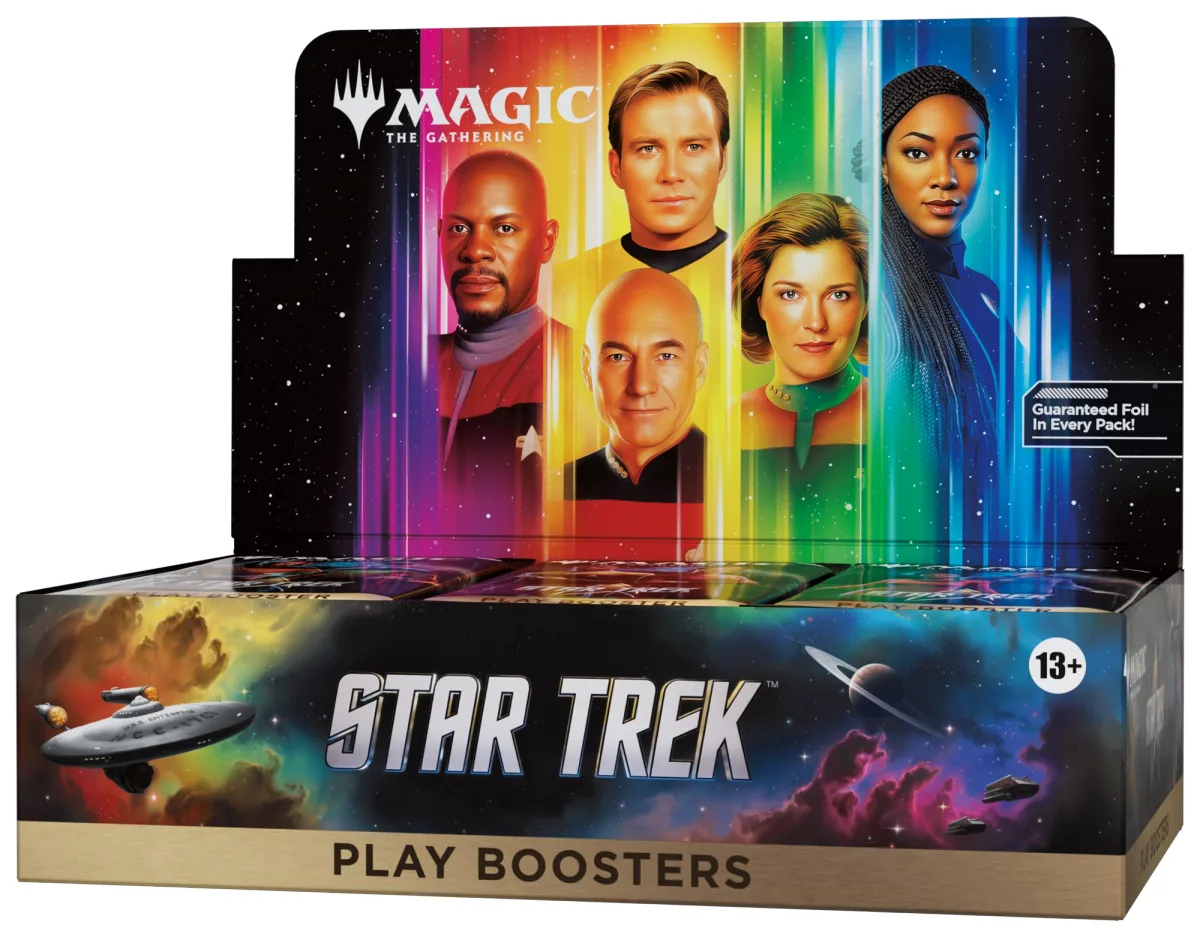
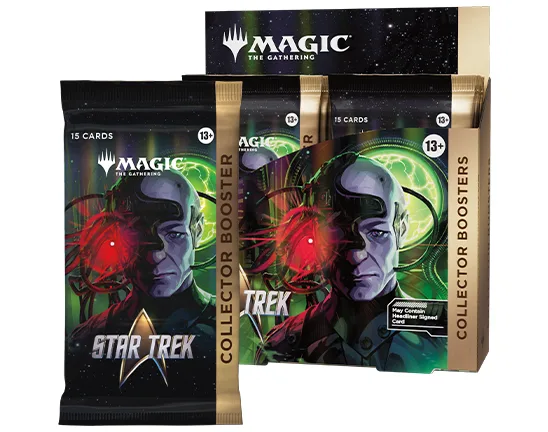
Wizards' own Product Guide pitches the Play Booster as the pack for opening for fun and for drafting, and the Collector Booster as the "shortcut to the coolest cards", with 5 to 6 rares or higher and 8 to 10 foils per pack. The first Secret Lair drop went on sale on December 2, 2019. For scale, Wizards' MSRP for Star Trek was $6.99 per Play Booster and $37.99 per Collector Booster (October 20, 2026); store prices vary.
Universes Beyond: the crossover sets
Universes Beyond is Magic's line of sets built on other franchises. Wizards announced it in February 2021, and since 2025 new Universes Beyond booster sets are legal in every Constructed format, Standard included. Final Fantasy is the headline case: Hasbro CEO Chris Cocks said on the company's second-quarter 2025 call that the set sold $200 million of product in a single day.
| Franchise | Magic release | Date |
|---|---|---|
| Warhammer 40,000 | Commander decks | Oct 7, 2022 |
| The Lord of the Rings | Tales of Middle-earth | Jun 23, 2023 |
| Doctor Who | Commander decks | Oct 13, 2023 |
| Fallout | Commander decks | Mar 8, 2024 |
| Assassin's Creed | Assassin's Creed | Jul 5, 2024 |
| Final Fantasy | Final Fantasy | Jun 13, 2025 |
| Spider-Man | Marvel's Spider-Man | Sep 26, 2025 |
| Avatar | Avatar: The Last Airbender | Nov 21, 2025 |
| Teenage Mutant Ninja Turtles | Teenage Mutant Ninja Turtles | Mar 6, 2026 |
| Marvel | Marvel Super Heroes | Jun 26, 2026 |
| The Hobbit | The Hobbit | Aug 14, 2026 |
| Star Trek | Star Trek | Nov 13, 2026 |
Dates from Scryfall and Wizards' product pages, checked November 14, 2026.
How to start collecting MTG cards: rarity, numbers, treatments
The color of the set symbol, to the right under the art, tells you how rare a card is (Comprehensive Rules 206.2), and newer cards repeat it as a letter next to the collector number:
| Rarity | Set symbol color | Letter |
|---|---|---|
| Common | black or white | C |
| Uncommon | silver | U |
| Rare | gold | R |
| Mythic rare | red-orange | M |
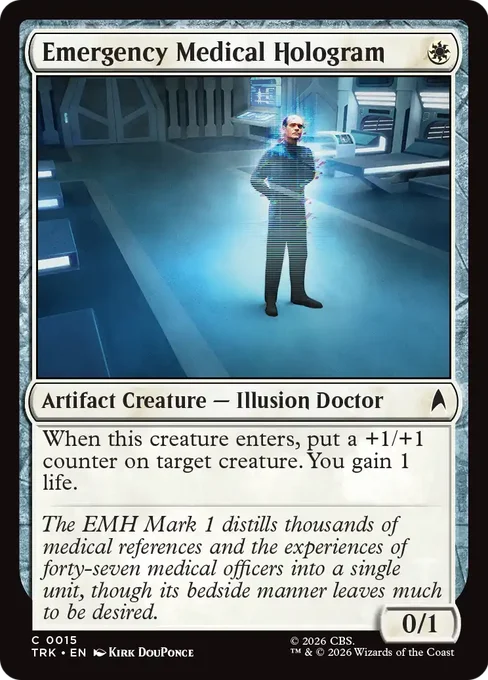
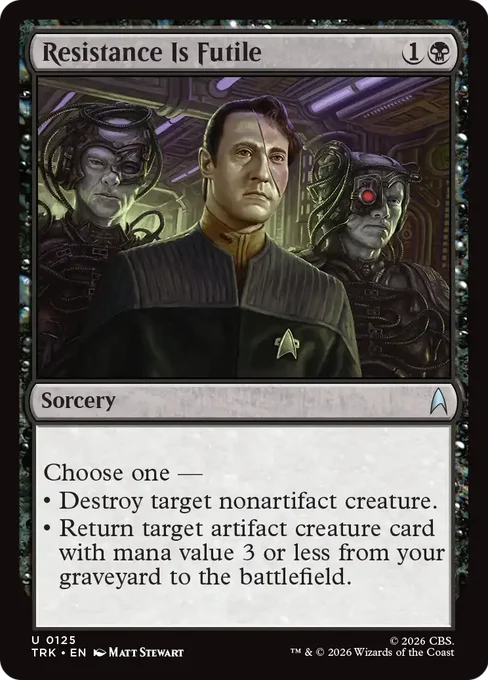
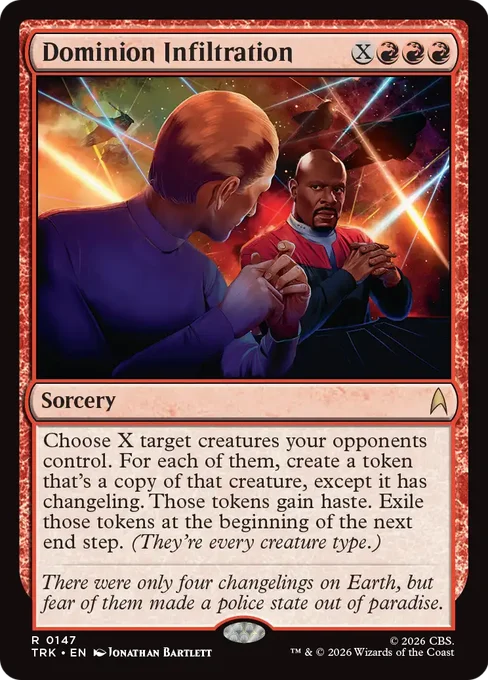
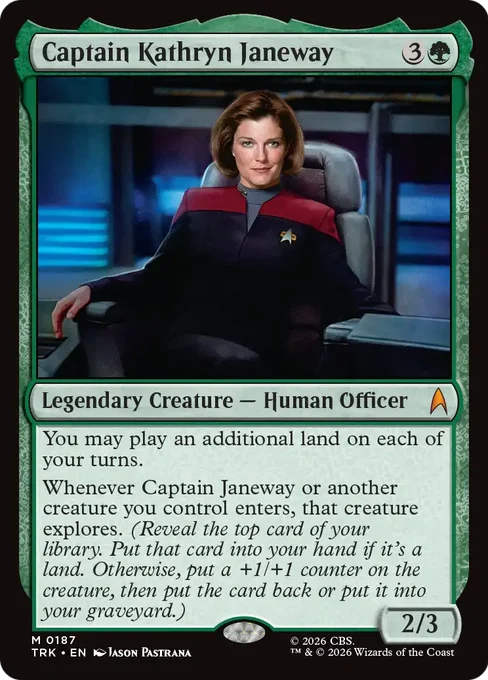
Mythic rare joined the scale in 2008 with Shards of Alara. The collector number, set code and language code share the bottom-left corner, and the number doesn't change between print languages, so a Japanese or German copy goes on the same checklist line as the English one. Magic is currently printed in English, Japanese, Spanish, French, German and Italian. The main set comes first; numbers above it are the same cards in other dress:
- Borderless: the art runs to the edge with no frame.
- Extended art: the art stretches out to the left and right edges.
- Showcase: a special frame built around the set's theme, such as Star Trek's LCARS starship-computer frame.
- Surge foil: a rippled foil finish; Wizards first used the name in 2022, on the Collector's Edition Commander decks for Warhammer 40,000.
- Serialized: each copy stamped with its own number; Magic boosters first carried them in The Brothers' War (2022), numbered out of 500 and only in Collector Boosters (Wizards, September 29, 2022).
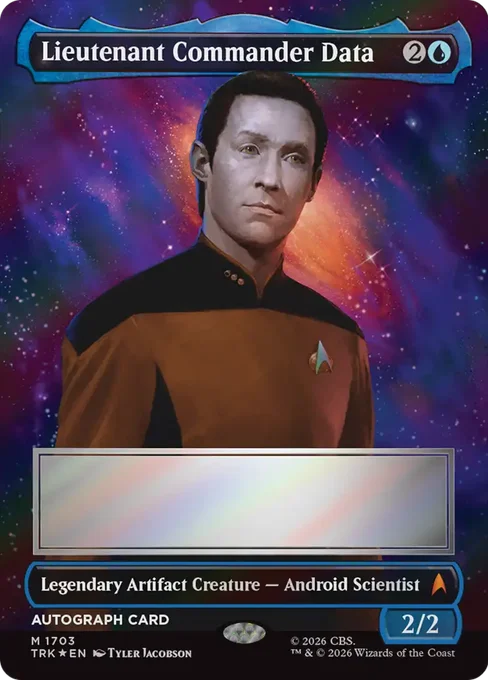
- Signed headliners: in Star Trek, seven cards signed by the actors, fewer than 250 copies of each, Collector Boosters only.
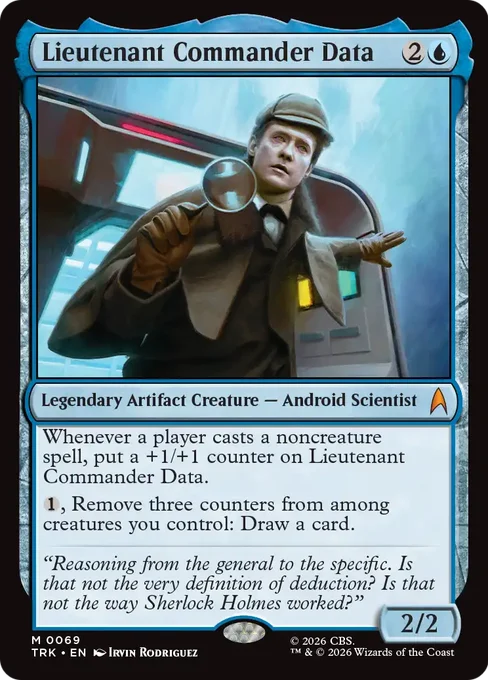
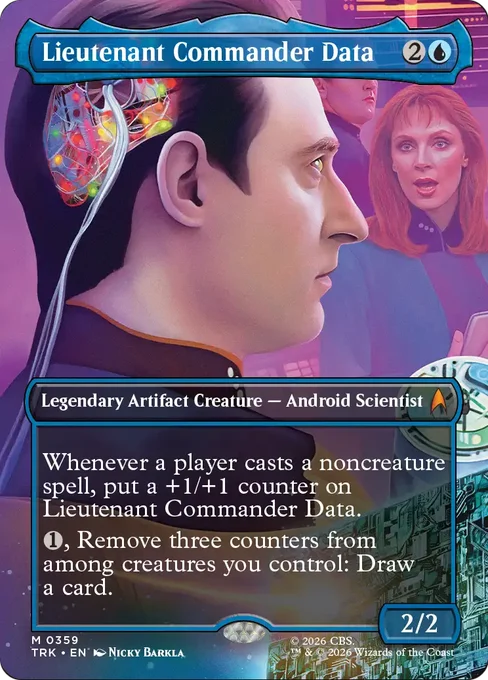
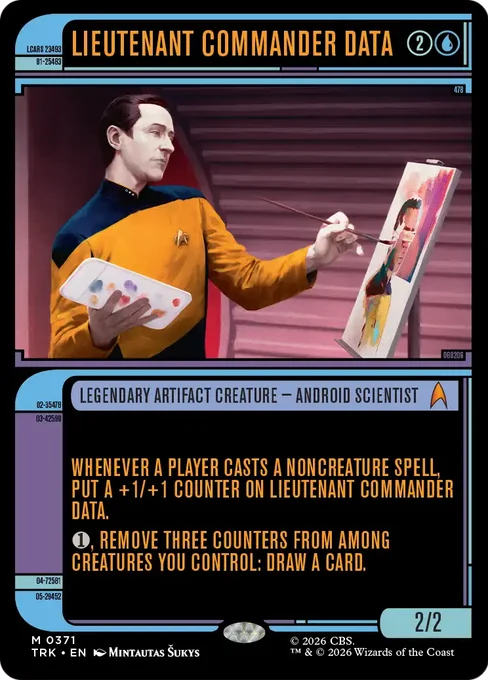
Foils go back to Urza's Legacy in February 1999. Traditional foil and newer finishes such as surge foil are different finishes, and they often come from different products. Here is one card, Lieutenant Commander Data from Star Trek, across its five collector numbers:
| Number | Version | Where it's found |
|---|---|---|
| 69 | main set, mythic rare | Play and Collector Boosters, non-foil and foil |
| 359 | borderless scene card | Play and Collector Boosters |
| 371 | LCARS frame | Play and Collector Boosters |
| 505 | LCARS frame in surge foil | Collector Boosters only |
| 1703 | signed headliner | Collector Boosters only, fewer than 250 copies |
MTG complete set vs master set
We found no official Wizards definition of either term, so here is how collectors use them. A complete set is one copy of every main-set number: 1 to 306 in Star Trek. Hipsters of the Coast's Edge of Eternities collecting guide (July 15, 2025) draws the same line, calling the first 261 cards the main set. Whether foils belong in a complete set has been argued since foils arrived in 1999 (MTG Wiki, "Collecting"). A master set is a term borrowed from Pokémon collectors: every version of every card in the set, though each collector decides where the edge lies. The gap is real. Scryfall lists 586 printings under Star Trek's TRK code against a main set of 306 numbers.
MTG card condition guide: NM, LP, MP, HP and the Cardmarket scale
Condition decides what a card is worth in a trade, and the two common scales only look alike. TCGplayer in the US uses five grades: Near Mint, Lightly Played, Moderately Played, Heavily Played and Damaged. The European marketplace Cardmarket uses seven, and its "Light Played" already means severe wear. The comparison below follows Cardmarket's own table as quoted by MTG Wiki:
| Cardmarket | Meaning | Rough US equivalent (per Cardmarket's table) |
|---|---|---|
| Mint (M) | perfect | Mint |
| Near Mint (NM) | pack-fresh | Near Mint |
| Excellent (EX) | minor wear | Slightly Played / Excellent |
| Good (GD) | visible wear | Moderately Played |
| Light Played (LP) | severe wear | Played |
| Played (PL) | damaged | Heavily Played |
| Poor (PO) | destroyed | Poor |
Cardmarket's rules add that surface scratches make a card Good at best, and that Excellent cards must not be sold as Near Mint. So when you trade, name the scale: LP on Cardmarket and LP on TCGplayer are not the same card.
How to organize and trade your MTG collection on ColleX
ColleX keeps Magic in its Magic: The Gathering section, starting with MTG Star Trek and the Star Trek Commander decks. Each collector number is its own entry, so Data from the example above is five entries; foil or not, one number stays one entry. Completion counts every printing, as a master set would, and the Group filter narrows the list to Main set (your complete set) or to a single treatment. Tap Have on what you own and Want on what's missing. Entries follow the set's own numbering, which is also a simple order for a binder.
Frequently asked questions
How do you play Magic: The Gathering?
Two players with decks of 60 or more cards start at 20 life with seven cards in hand. Each turn you may play one land, lands make mana, and mana pays for creatures and spells. The first player to bring the opponent to zero life wins.
What is the starting life total in MTG?
20 in a normal game. Commander starts each player at 40, and a player also loses after taking 21 combat damage from a single commander.
How many cards are in an MTG deck?
At least 60 in Standard, with no more than four copies of a card other than basic lands. Exactly 100 in Commander, commander included, one copy of each card. At least 40 in Draft and Sealed.
How do I get started in Magic: The Gathering?
Learn the rules for free on MTG Arena, then pick a physical starting point: a 40-card Welcome Deck from a Wizards Play Network store, a two-player Beginner Box, or a Commander precon if you will play in a group of three to five.
What is the difference between a Collector Booster and a Play Booster?
A Play Booster has 14 cards and a token, with at least one rare or mythic and one foil, and is made for opening and drafting. A Collector Booster (15 cards in Star Trek) is mostly foil and full of borderless, showcase and extended-art versions, with a rare or mythic guaranteed in five slots.
Is Magic: The Gathering worth collecting?
That depends on what you want from it; ColleX makes no value forecasts. Collectors chase very different goals, from complete sets and playsets to foils, a favorite artist or one character, so it helps to pick one target set and track it by collector number.
What do NM and LP mean on Magic cards?
NM (Near Mint) means pack-fresh; LP marks a played card. On TCGplayer, Lightly Played means light wear, while Cardmarket's Light Played means severe wear, close to the US "Played".
Can I trade spare Magic cards with other collectors on ColleX?
Yes, in every country where the ColleX Market is open. On the set checklist, give your doubles a Have mark with the real count and your gaps a Want mark; ColleX then points you to collectors who own what you lack and lack what you own, and the two of you settle the swap in chat.
Sources: Wizards of the Coast: How to Play, Standard and Commander format pages, MTG Arena Getting Started, Product Guide (all read November 14, 2026), Comprehensive Rules (November 6, 2026), "Collecting Magic: The Gathering | Star Trek" (October 20, 2026), "Star Trek Welcome Decks" (August 5, 2026), "What Are Play Boosters?" (October 16, 2023), "A First Look at The Brothers' War" (September 29, 2022), Secret Lair "About"; Wizards Play Network (November 18, 2025); Scryfall (November 14, 2026); MTG Wiki; Cardmarket "Card Condition"; TCGplayer; Hipsters of the Coast (July 15, 2025); Video Games Chronicle and ICv2 on Final Fantasy (July 2025). Images: Wizards of the Coast; card scans by Wizards of the Coast via Scryfall. STAR TREK ™ & © CBS Studios Inc.
This article is unofficial Fan Content permitted under the Fan Content Policy. Not approved/endorsed by Wizards. Portions of the materials used are property of Wizards of the Coast. ©Wizards of the Coast LLC.