Kinder Surprise 90s toys: 7 vintage collections from Hippos to Foxes
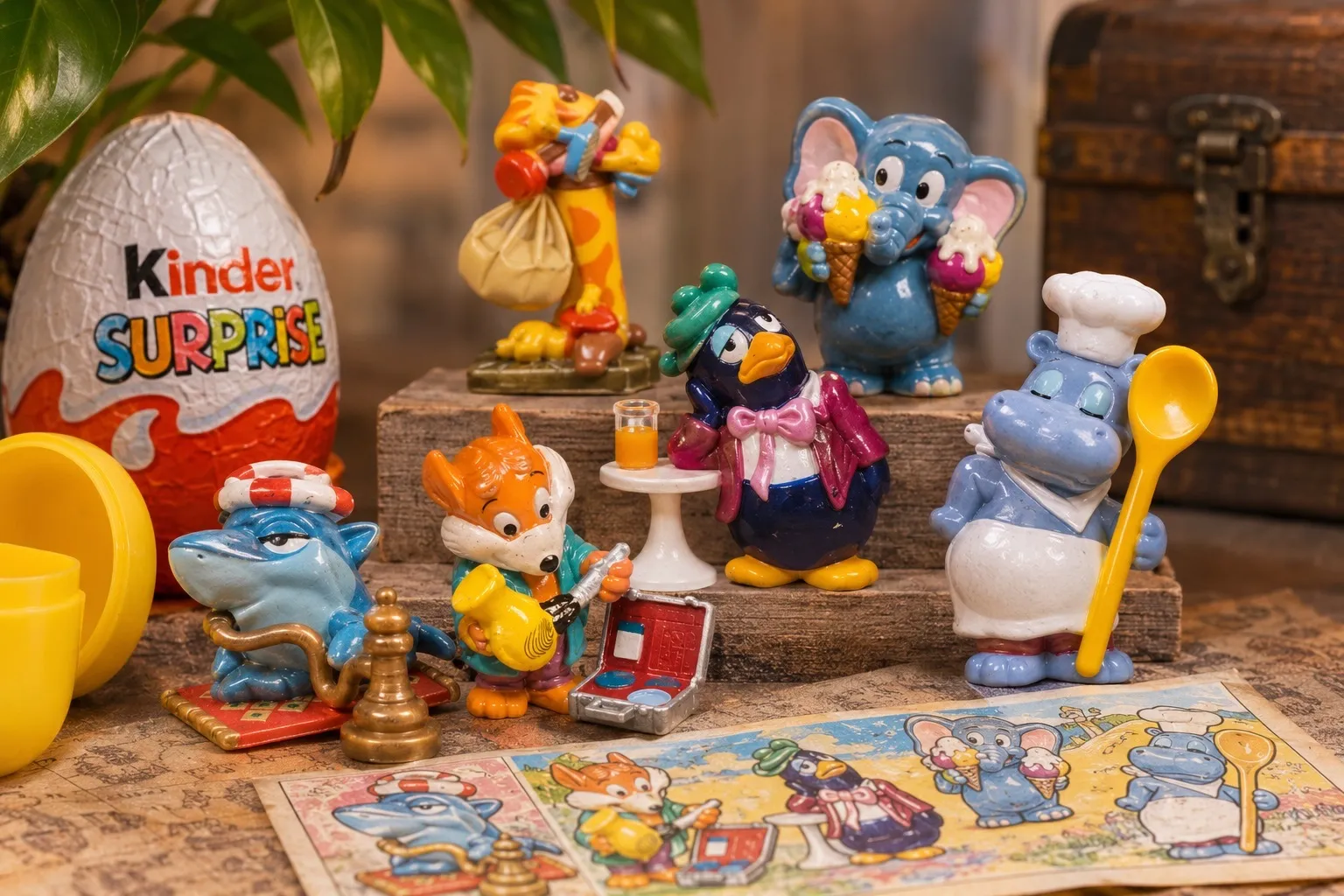
Kinder Surprise toys from the 90s: seven collections from 1992 to 1999, each with ten hand-painted pieces. Meet the Happy Hippos Holiday cruise crew, the Peppy Pingos Party penguins, the Sharkybaba sharks (also sold as Shalibaba), the Elefantao elephants (Funny Fanten in Germany), the Happy Dinos builders (originally Die Dapsy Dinos), the Fancy Fuxies foxes (Super Foxes) and the Super Giraffe daredevils. Ferrero launched the egg in 1974, and all seven sets are in the ColleX catalogue: 70 pieces to tick off.
Long before POP MART, secret figures and the blind box craze, a whole generation of children already knew the thrill of collecting. You peeled back the familiar white and red foil, snapped the chocolate egg in two and opened the yellow capsule, hoping for the hippo, penguin or dinosaur you had been dreaming of rather than one more little car or kit.
Through the 90s and into the early 2000s, Ferrero kept building tiny worlds where every character had a name, a personality and a story. Here are seven collections that take you straight back.
Vintage Kinder Surprise collections: year, name, number of figures
| Collection | Year | Early name and country | Figures |
|---|---|---|---|
| Happy Hippos Holiday | 1992 | Die Happy Hippos auf dem Traumschiff, Germany | 10 |
| Peppy Pingos Party | 1994 | Die Peppy Pingo Party, Germany | 10 |
| Sharkybaba / Shalibaba | 1995 | Squalibabà, Italy and France | 10 |
| Elefantao / Funny Fanten | 1995 | Die Funny Fanten im Cluburlaub, Germany | 10 |
| Happy Dinos | 1995 | Die Dapsy Dinos, Germany | 10 |
| Fancy Fuxies / Super Foxes | 1998 | Fancy Fuxies, Germany | 10 |
| Super Giraffe | 1999 | Le 10 spericolate Super Giraffe, Italy | 10 |
Years and names are compiled from collectors' catalogues as of November 2026. One set could carry a different name in each market, so the table shows the early one.
More than just toys
What set these collections apart were moulded plastic figures painted by hand, with care going into the smallest details, from a character's expression to the pattern on their clothes. Each hero had a name, a recognisable look and often accessories that completed the little scene. Paper inserts for some series showed the whole collection and added short captions introducing the characters and their adventures. Selected collections also got themed puzzles, promotional dioramas and display cases that brought the figures together in one scene. That is how a toy from a chocolate egg became part of a carefully planned world you wanted to complete.
Happy Hippos Holiday (1992): the holiday everyone dreamed of
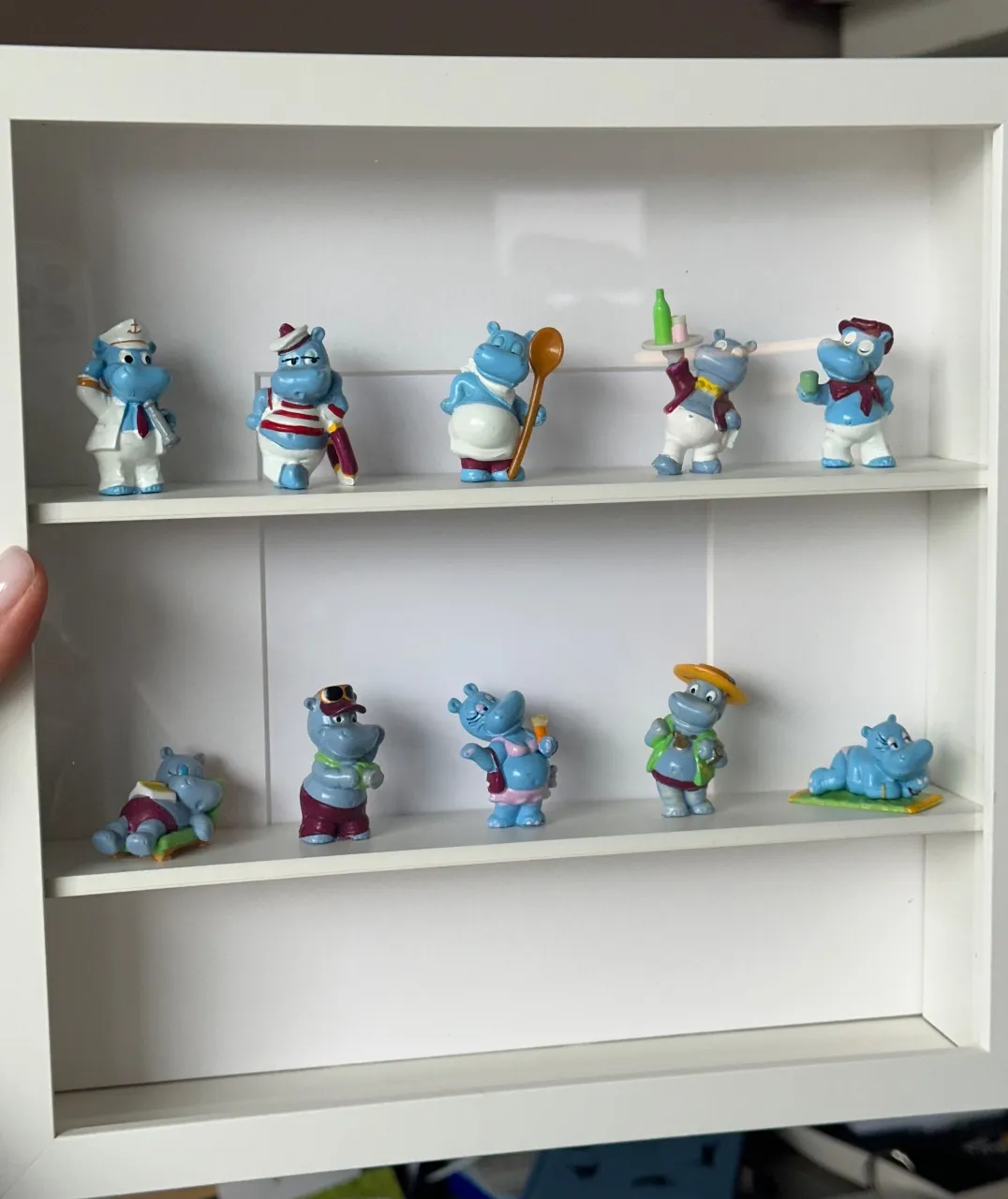
Ten blue hippos set off on a sea cruise: some sunbathe on deck with a cocktail while others steer the ship, cook and wait on the passengers. There was even a display case shaped like half a cruise liner, and a 2001 reissue for Italy and France which, according to collectors, had only eight characters.
Germany got them first, in 1992, under the title Die Happy Hippos auf dem Traumschiff. Export editions in 1995 and 1996 switched to Happy Hippos Holiday, and collectors date the UK release to 1996. The hippos were created for Ferrero by the artist André Roche.
Peppy Pingos Party (1994): a very 90s party
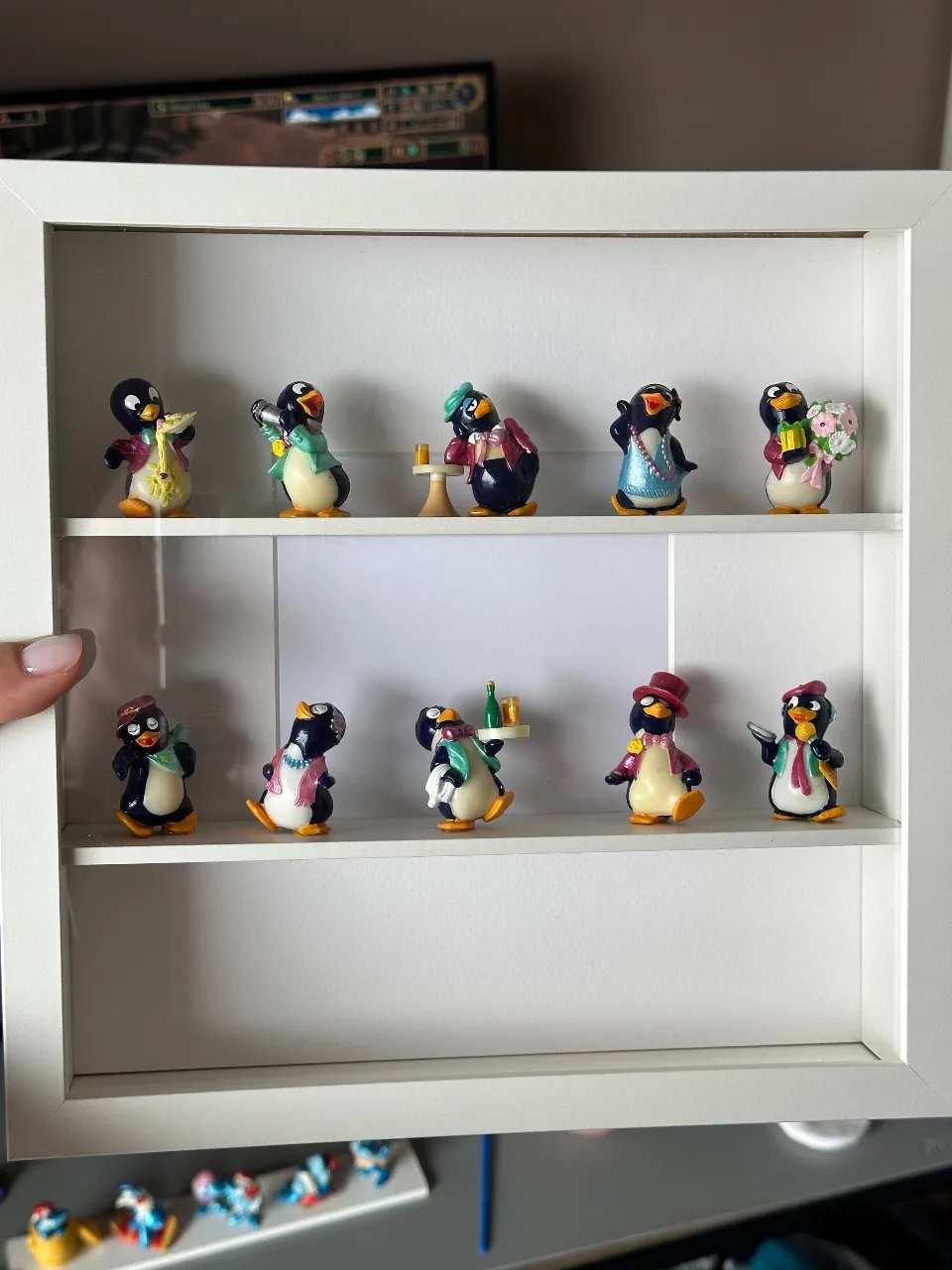
Penguins in bright jackets, with cocktails, chunky jewellery and party hats, throw a proper bash. The one that feels most symbolic today is the DJ holding a compact disc in his flipper, a tiny but instantly recognisable piece of that decade's music culture.
It launched in Germany in 1994, titled Die Peppy Pingo Party, and follows the first Peppy Pingos series of 1992, so a search for the name usually brings up both.
Sharkybaba / Shalibaba (1995): sharks from an Eastern fairy tale
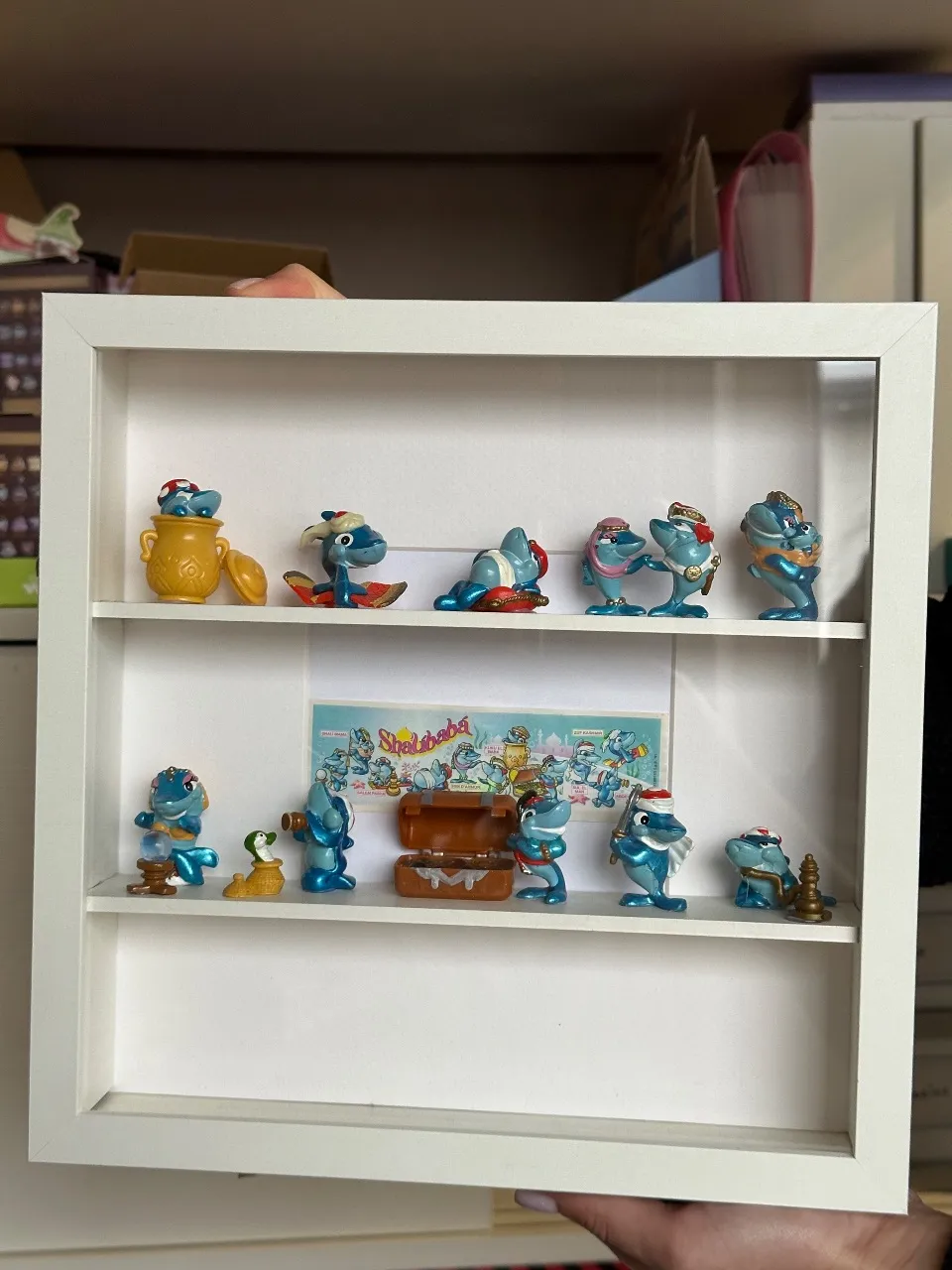
Who says sharks have to be scary? This collection turns them into heroes of a fairy-tale East, complete with a flying carpet, an enchanted snake, a treasure chest and magical accessories. Their shiny blue finish made them stand out from other series.
According to collectors, the set travelled as Squalibabà in Italy and France, Shalibaba across much of Europe, Tibur-Ali for Spain and Portugal, and Sharkybaba in England.
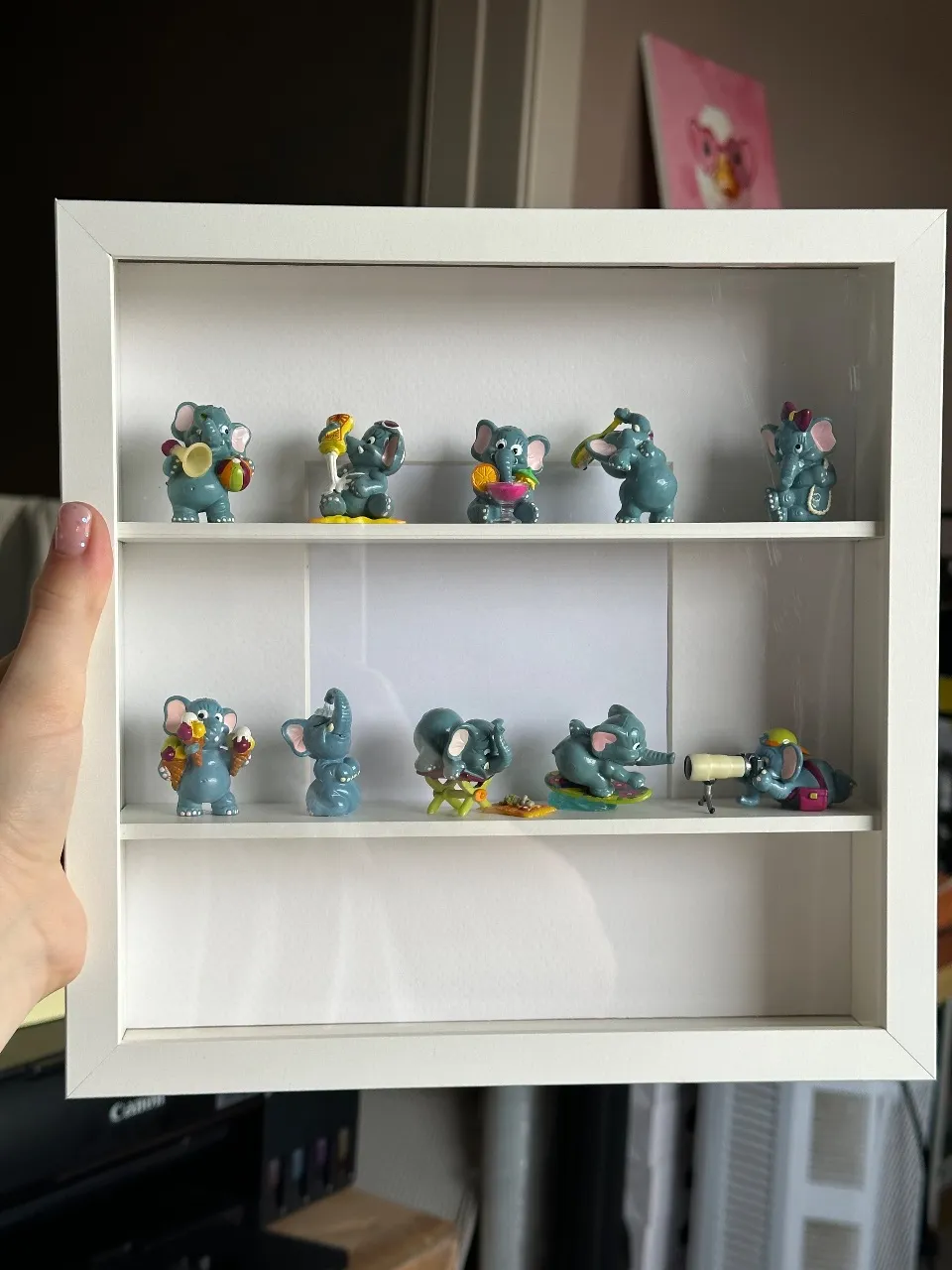
Elefantao / Funny Fanten (1995): little elephants on a big holiday
These elephant calves eat ice cream, take photos, sip cold drinks and play in the water. The artists made clever use of the animals themselves, working the long trunks into the jokes, while the miniature accessories turn every figure into its own scene from a summer break.
In Germany the 1995 series was called Die Funny Fanten im Cluburlaub, and Italy knows it as Elefantao. Collectors also list it as Brazile Phants for Ireland and Scotland.
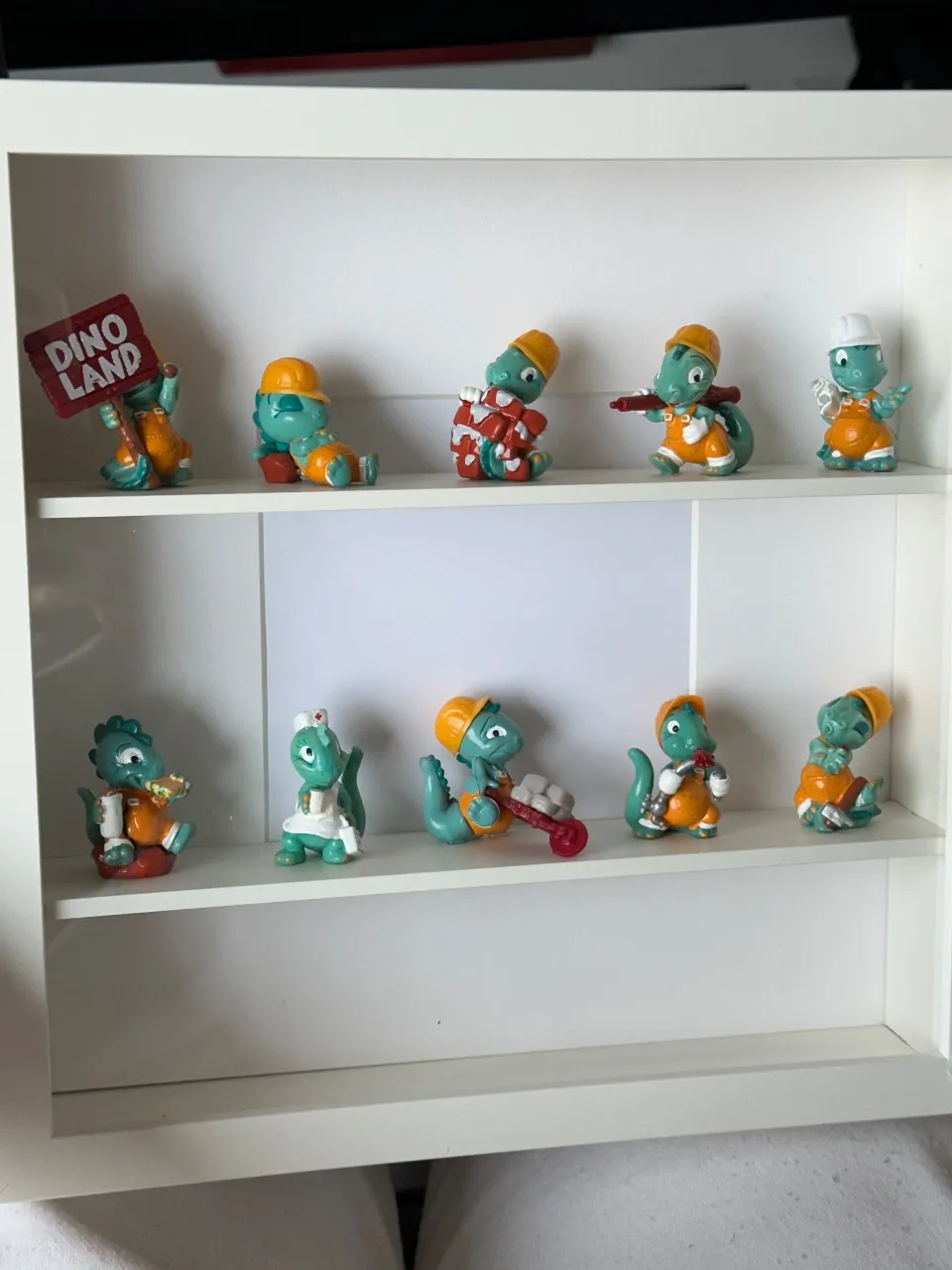
Happy Dinos / Die Dapsy Dinos (1995): building their own world
Green dinosaurs in orange overalls build their own Dino Land, wheeling bricks, handling tools and, of course, never missing a lunch break. One fun detail: collectors note that the lettering on the main sign changed with the market, reading DINO LAND, HAPPY DINOS or KINDER. Regional differences like this are now a collecting field of their own.
From 1996 Italy sold the figures as I Simpatissimi Happy Dinos, while France and several other countries got Drolly Dinos. Don't confuse them with Die Drolly Dinos of 1993, which is a different series.
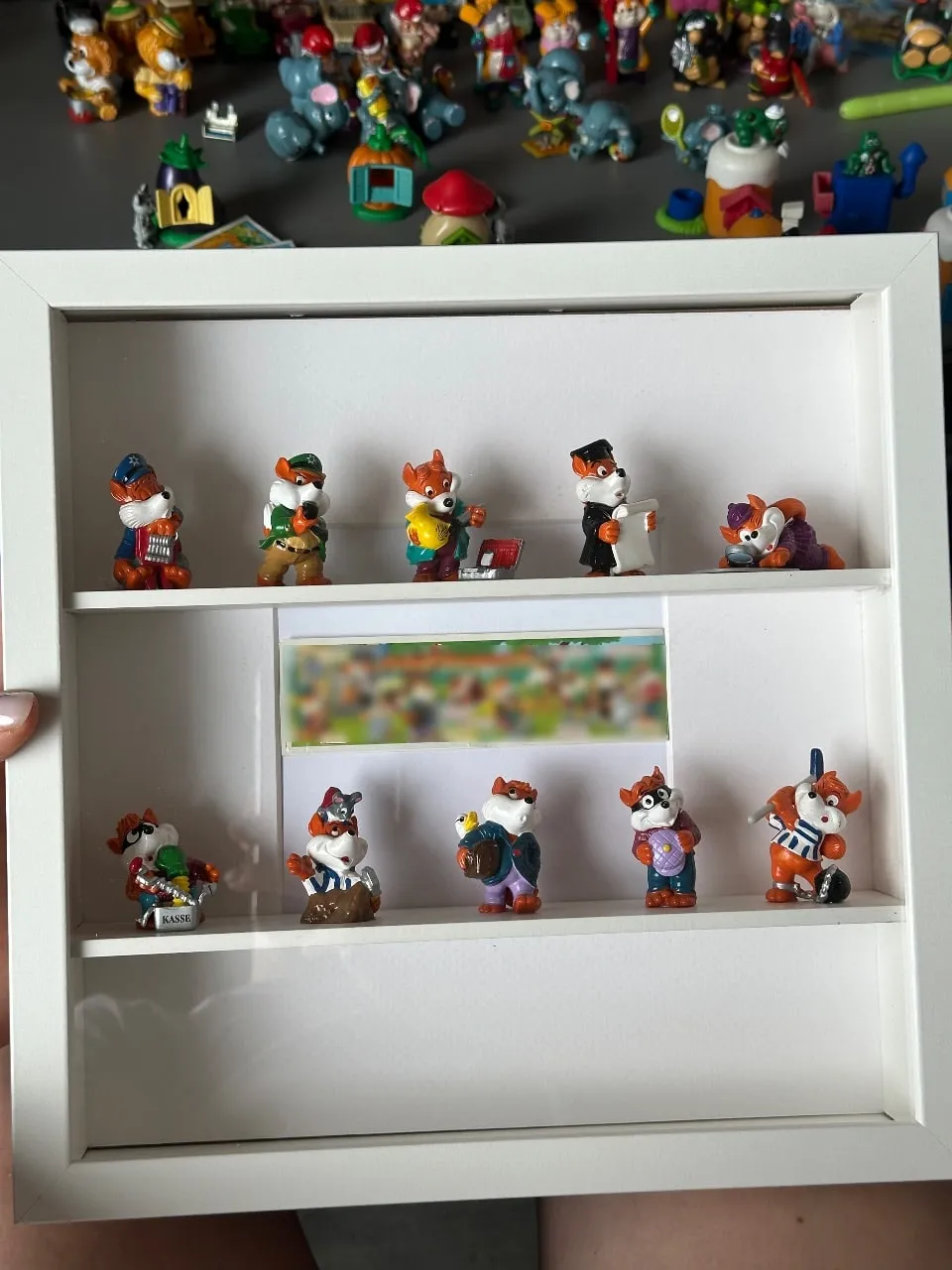
Fancy Fuxies / Super Foxes (1998): both sides of the law
Probably one of Ferrero's most unusual themes for a children's collection. Red foxes solve crimes, crack safes, hand down verdicts and even try to break out of prison. The humour hides in the details: one convict uses his own ball and chain for a round of golf, and a hapless burglar is met by a boxing glove flying out of the safe.
The series appeared in Germany in 1998 as Fancy Fuxies and reached other markets as Super Foxes in 2002.
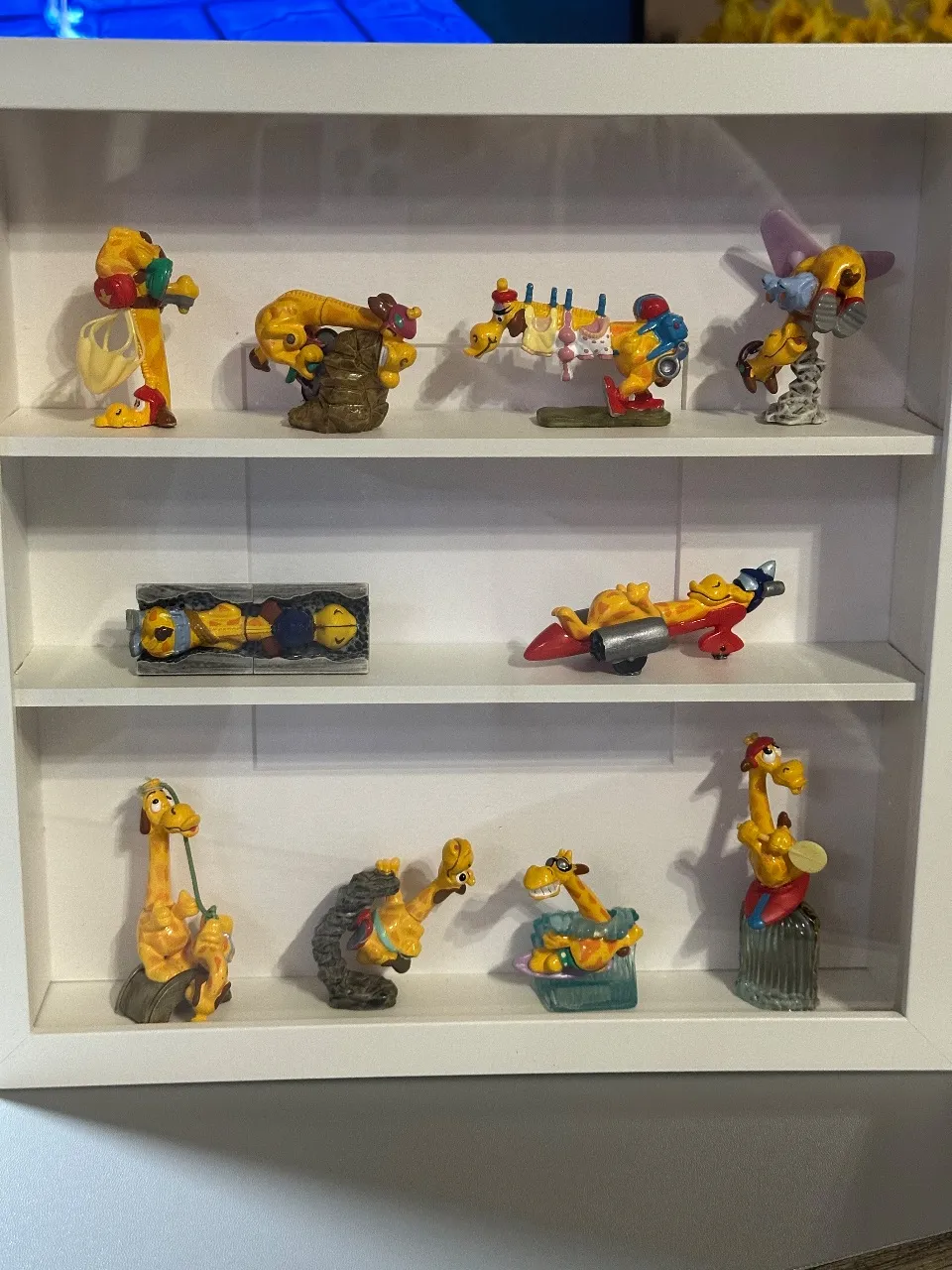
Super Giraffe (1999): when a long neck is a superpower
Giraffes scale cliffs, leap from heights, ride rockets and take up water sports, and those long necks let the designers create some truly odd compositions. One of the most fun pieces is the caver with a working torch: collectors say the lamp on the helmet really lights up, which made the tiny toy interactive too.
Italy had it first: Le 10 spericolate Super Giraffe, 1999. A year later France received a recoloured version called Super Girafes.
Collecting that started with a chocolate egg
Back then there were no handy online catalogues, marketplaces or collector apps. Paper inserts showed you the full series, you swapped duplicates with friends, and you kept trying for that last missing character.
Today these figures are being sought out, bought, swapped and carefully displayed all over again. Only now it's grown-ups doing it, people for whom a small plastic hippo can mean far more than the most expensive modern collectible.
All seven sets are in the Kinder catalogue on ColleX, where you can mark what's already on your shelf and what's missing. Curious how far the toys have come? Compare them with the Kinder Surprise toys of 2025/2026.
Which series started your collection?
Frequently asked questions
Are old Kinder Surprise toys worth anything?
Some can be, but there is no single price. Value depends on the series, the exact variant, the condition, whether all the parts are there and whether the original paper insert survives. Damage lowers it noticeably, and fake inserts and puzzles do circulate. ColleX has no verified prices for these seven sets yet, so we don't quote figures.
What Kinder Surprise toys came out in the 90s?
Hand-painted series from the decade include Happy Hippos Holiday (1992), Peppy Pingos Party (1994), Sharkybaba/Shalibaba, Elefantao and Happy Dinos (all 1995), Fancy Fuxies (1998) and Super Giraffe (1999). Each has 10 pieces, 70 in the ColleX catalogue. They are only part of what Ferrero released in those years.
When did the Kinder Surprise hippos come out?
The cruise hippos date from 1992, when Germany got Die Happy Hippos auf dem Traumschiff. Abroad they were sold as Happy Hippos Holiday in 1995 and 1996. They aren't the only Kinder hippos: collectors also list other series, including Star Wars hippos from 2002, so check the name and year when you search.
Why do vintage Kinder sets have different names?
Ferrero released the same figures under local names. The Happy Dinos are Die Dapsy Dinos in Germany and Drolly Dinos in France, and Sharkybaba is Squalibabà in Italy. A name alone can mislead, because Die Drolly Dinos of 1993 is a separate series, so compare the year and the figures too.
How do I trade duplicate vintage Kinder toys on ColleX?
Open the set, enter 2 next to “Have” for the figure you own twice and mark the ones you lack as “Want”. ColleX then points you to collectors whose lists match yours, and you settle the swap between you in chat.